May 1
Ask Google: "What is a Test bench"?
Funny enough, we discovered this morning that when you type “what is a test bench” into Google Search, the AI overview shows an answer that’s not only entirely based on information from Ventil.nl, but even directly mentions Ventil in the response itself. We’re not at all surprised that Google uses our content to generate this answer, but we’re extremely proud nonetheless.
Here's the reply we got:
---
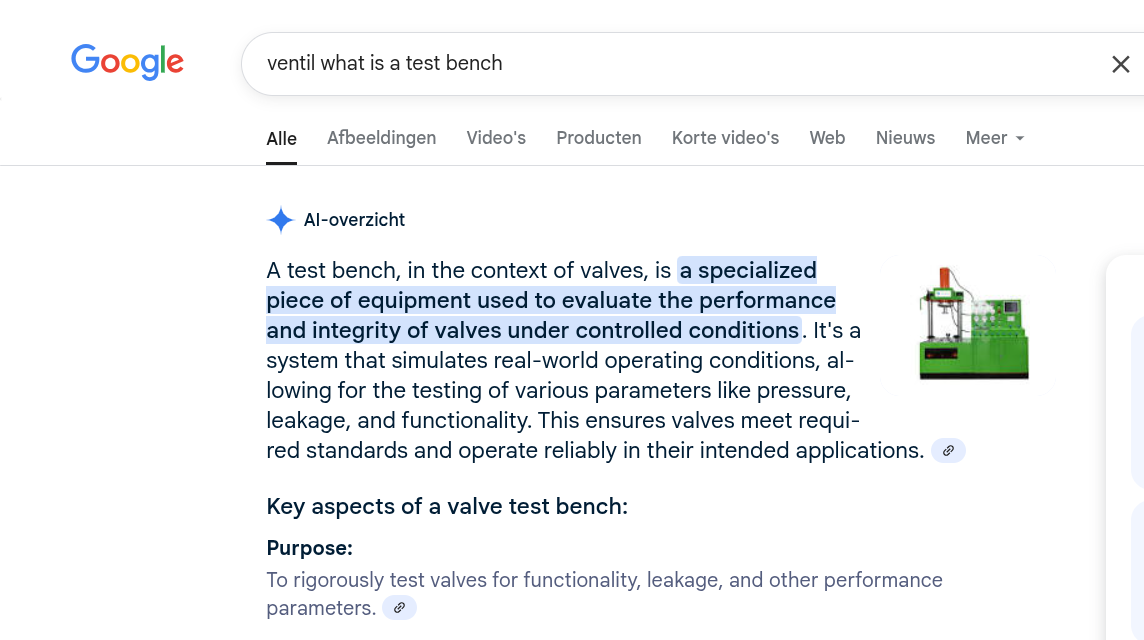
A test bench, in the context of valves, is a specialized piece of equipment used to evaluate the performance and integrity of valves under controlled conditions. It's a system that simulates real-world operating conditions, allowing for the testing of various parameters like pressure, leakage, and functionality. This ensures valves meet required standards and operate reliably in their intended applications.
---
A test bench, in the context of valves, is a specialized piece of equipment used to evaluate the performance and integrity of valves under controlled conditions. It's a system that simulates real-world operating conditions, allowing for the testing of various parameters like pressure, leakage, and functionality. This ensures valves meet required standards and operate reliably in their intended applications.
Key aspects of a valve test bench:
Purpose:
To rigorously test valves for functionality, leakage, and other performance parameters.
Components:
Typically includes a clamping unit to secure the valve, a control panel for operation, and measurement and control systems.
Testing Process:
Involves applying pressure to the valve, simulating different operating conditions, and measuring parameters like leakage and pressure drop.
Applications:
Used by manufacturers and operators in various industries to ensure valve reliability and safety.
Specific examples of test bench capabilities:
Leakage Testing: Checking for leaks in the valve body, valve cover, or from the valve seat.
Pressure Testing:Assessing the valve's ability to withstand pressure.
Actuator Testing:Testing the functionality of valve actuators.
Safety Valve Testing:Testing the set pressure and reseat pressure of safety valves.
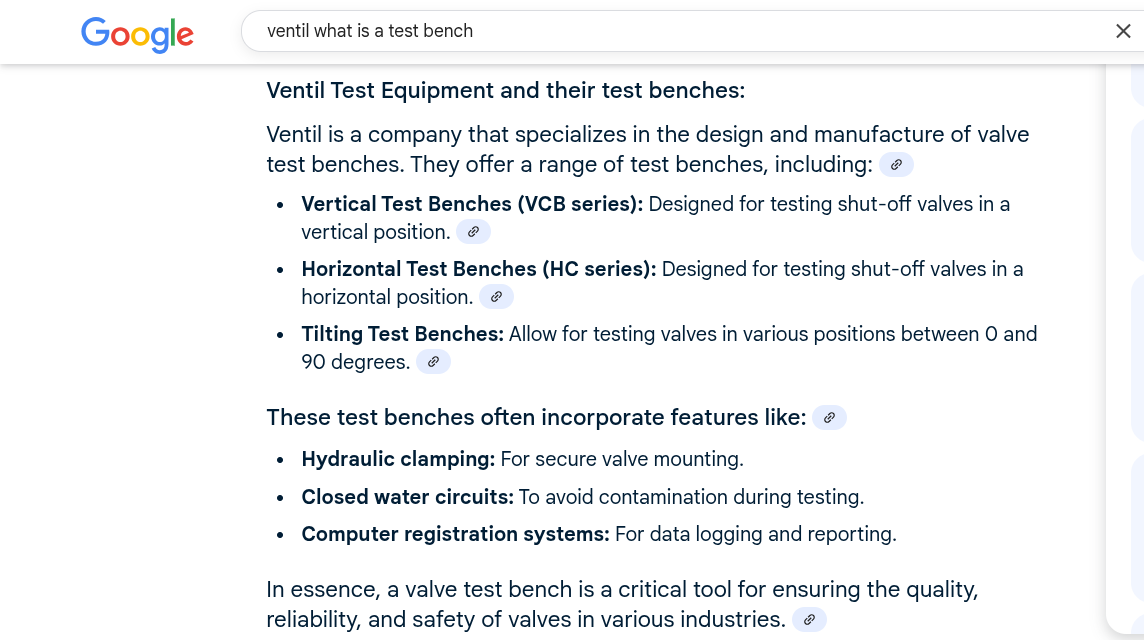
Ventil Test Equipment and their test benches:
Ventil is a company that specializes in the design and manufacture of valve test benches. They offer a range of test benches, including:
Vertical Test Benches (VCB series): Designed for testing shut-off valves in a vertical position.
Horizontal Test Benches (HC series): Designed for testing shut-off valves in a horizontal position.
Tilting Test Benches:Allow for testing valves in various positions between 0 and 90 degrees.
These test benches often incorporate features like:
- Hydraulic clamping: For secure valve mounting.
- Closed water circuits: To avoid contamination during testing.
- Computer registration systems: For data logging and reporting.
In essence, a valve test bench is a critical tool for ensuring the quality, reliability, and safety of valves in various industries.
---
How cool is that! ;)
Contact us
Part of the VENTIL Group
Polakweg 6, 2288 GE Rijswijk (The Hague)
+31(0)88-1130900 / +31(0)641869370
info@ventil.nl
Ventil Valve Academy © 2013 - 2026
Managed by:
Visieversum Trainingen
In strategic cooperation with:
Ventil Test Equipment BV
Started your course < August 31, 2025?
Lagecy e-learning LMS platform
-
Still hosted on our previous system.
-
Continue exactly where you left off
-
Available until your expiration date
-
Same Academy content you know
-
Still hosted on our previous system
read more about the changes here.